China has become a significant sourcing base for decorative wall products, including murals, hand-painted panels, and digitally printed artworks. For global buyers, the appeal is practical: broad material choices, scalable production, and competitive customization. A factory visit can reveal more than a polished catalogue. Look closely at pigment samples, corner finishing, packaging, and color consistency.
Industry data supports this growing opportunity. Grand View Research identifies renovation, hospitality development, and commercial interiors as important drivers for the global decorative paints and coatings market. Fortune Business Insights also reports continued expansion in the wider paints and coatings industry, supported by construction and refurbishment demand. These findings suggest stronger interest in visually distinctive surfaces, not only standard paint finishes.
That is where Unique Wall Painting suppliers can create value. Leading Chinese manufacturers may offer textured plaster, canvas murals, metal reliefs, eco-conscious coatings, and custom artwork reproduction. Yet “custom” does not always mean reliable. Buyers should verify material safety documentation, sample approval procedures, production tolerances, intellectual property ownership, and export packaging before placing large orders.
Small details matter.
A clear supplier evaluation should combine factory experience with measurable evidence. Check production capacity, quality-control records, moisture resistance, fire-performance documentation, and installation guidance. Independent reports can describe market direction, but they cannot replace a physical sample or an audited supplier profile. This guide examines China’s top Unique Wall Painting suppliers through those practical criteria, while recognizing an uncomfortable truth: the lowest quotation may create the highest total cost after defects, delays, or difficult installation.
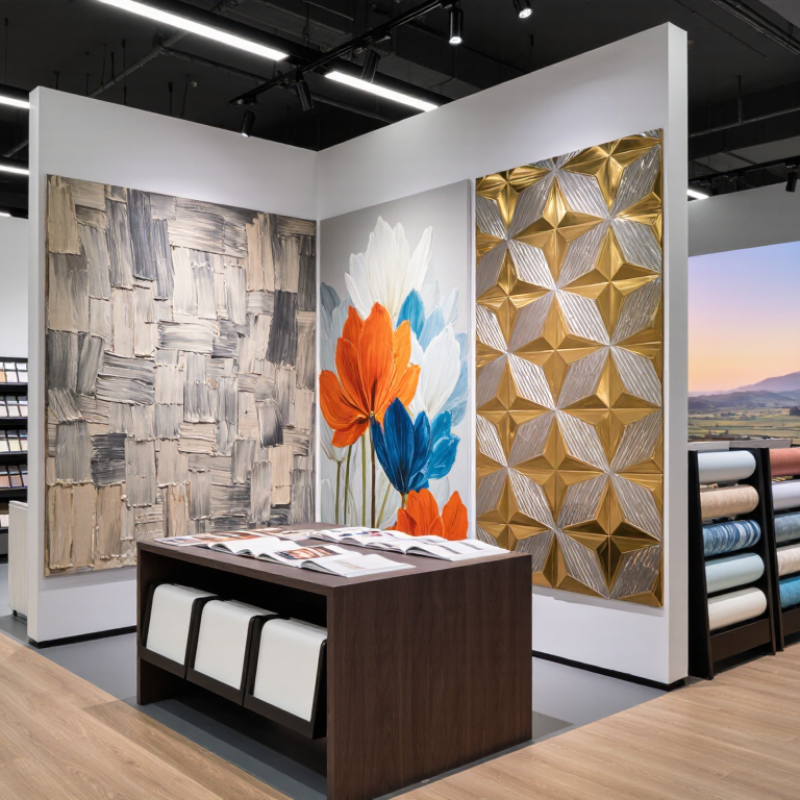
China’s wall painting suppliers stand out through scale, customization, and coordinated production. Many factories combine design teams, color laboratories, printing lines, and packaging departments. This structure helps global buyers develop murals, textured panels, and commercial artwork within one supply chain. According to Grand View Research, the global digital printing market is forecast to grow strongly through 2030. That trend supports China’s growing use of high-resolution wall graphics and short-run customization.
Their advantage is not only lower production cost. Suppliers can adjust dimensions, surface finishes, fire-retardant materials, and installation methods for different markets. Experienced exporters also understand moisture resistance, color consistency, and export packaging. The China National Textile and Apparel Council has reported continuing investment in digital textile production, which benefits printed wall materials as well. Yet, quality is not automatic. A beautiful sample may hide weak adhesion or uneven color under real lighting. That is worth remembering.
Tips: Request a physical sample, technical data sheet, and batch color record. Ask for abrasion, moisture, and fire-performance test results when required. Compare the printed sample under daylight and indoor lighting. Confirm carton protection with a trial shipment. Small checks prevent expensive surprises. Suppliers should also explain production tolerances clearly. A few millimeters matter during installation.
| Supplier Differentiator | Typical Offering in China’s Wall Painting Supply Market | Common Materials or Processes | Practical Buyer Benefit | Recommended Verification Point |
|---|---|---|---|---|
| Broad Product Formats | Canvas wall art, framed prints, mural wallpaper, decorative panels, posters, and oversize wall graphics. | Cotton or polyester canvas, non-woven wallpaper, PVC-based wallpaper, paper, wood-based panels, and metal composite panels. | One sourcing channel can support residential, hospitality, retail, office, and commercial decoration projects. | Request a product catalogue, material specification sheets, and physical samples for each format. |
| Flexible Customization | Custom images, dimensions, cropping, color adjustment, panel layouts, edge finishing, frames, and surface textures. | Digital printing, UV printing, latex printing, pigment printing, matte coatings, gloss coatings, and textured finishes. | Buyers can adapt artwork to local room sizes, interior styles, and project-specific branding requirements. | Approve a digital proof and a color sample before mass production. |
| Small-Batch and Bulk Production | Sample orders may be accepted in very small quantities, while customized production commonly starts at approximately 10–50 pieces depending on design and finishing. | Digital production allows multiple designs in one order; framed or specially finished products may require higher minimum quantities. | Suitable for product testing, seasonal collections, e-commerce launches, and large interior projects. | Confirm minimum order quantity by size, material, artwork, frame type, and packaging method. |
| Competitive Production Economics | Integrated sourcing of printing, cutting, stretching, framing, finishing, inspection, and export packing is widely available. | Standardized digital workflows, locally sourced substrates, automated cutting, and batch packaging processes. | Combining several production steps may reduce handling time and simplify purchase coordination. | Compare like-for-like quotations that include artwork preparation, frames, packaging, shipping terms, and inspection costs. |
| Fast Digital Design Iteration | Artwork can usually be adjusted for aspect ratio, resolution, color balance, panel division, and viewing distance before printing. | Digital proofing, high-resolution image processing, color management, and computer-controlled printing. | Reduces the need for printing plates and supports frequent design changes or multiple artwork variations. | Check the required image resolution, acceptable color tolerance, file format, and proof approval procedure. |
| Scalable Production Lead Times | Unframed samples commonly require about 3–7 business days; customized bulk orders often require about 10–25 business days, with complex framed projects taking longer. | Lead time depends on artwork approval, material availability, printing, drying or curing, assembly, inspection, and packaging. | Provides planning flexibility for both fast product testing and scheduled project deliveries. | Obtain a written production schedule that separates proof approval, manufacturing, inspection, and dispatch. |
| Export-Oriented Packaging | Protective film, corner guards, foam inserts, inner cartons, reinforced outer cartons, and pallet packing can be specified for international shipments. | Corrugated cartons, honeycomb protection, polyethylene film, foam, cardboard separators, and moisture-resistant wrapping. | Helps reduce scratches, crushed corners, frame deformation, and moisture-related damage during transport. | Request packaging photographs, carton dimensions, gross weight, drop-test details, and loading specifications. |
| International Order Support | Quotations may be prepared under common trade terms such as EXW, FOB, CIF, or DDP, depending on the supplier’s logistics capability. | Export cartons, commercial invoices, packing lists, shipping labels, and destination-specific documentation. | Makes it easier for overseas buyers to compare factory pricing with delivered-cost options. | Confirm the exact trade term, destination charges, customs responsibilities, insurance coverage, and delivery estimate. |
| Material and Safety Documentation | Product-specific declarations or test reports may be available for chemical restrictions, fire performance, odor, heavy metals, or indoor-use requirements. | Substrate composition reports, ink information, coating specifications, and third-party laboratory testing where required. | Supports compliance with import rules, commercial building requirements, and retailer documentation policies. | Verify that certificates and test reports match the exact material, ink, coating, and finished product supplied. |
| Quality Control Potential | Typical checkpoints include artwork approval, color consistency, dimensions, frame alignment, surface defects, quantity, and carton condition. | Pre-production samples, in-process inspection, final random inspection, and photo or video confirmation before shipment. | Creates a more repeatable result across different batches and multiple artwork designs. | Use an agreed inspection checklist with measurable tolerances for color, size, assembly, and packaging. |
Note: The quantities, lead times, materials, and documentation listed above are typical market practices and indicative ranges. Exact conditions vary by product specification, order volume, finishing method, destination, and supplier capability.
Many combine design teams, color laboratories, printing lines, and packaging departments. This structure supports custom murals, textured panels, and commercial artwork. It can simplify production coordination. Not always perfectly.
Options include hand-painted murals, printed canvas, relief panels, metal, glass, and carved wood artwork. Printed canvas is usually lighter and easier to ship. Relief surfaces create changing shadows under indoor lighting. Each material needs different handling.
Request a physical sample before placing a large order. Check color under daylight and indoor lighting. Inspect canvas tension, frame joints, coating uniformity, and surface odor. A beautiful sample can still hide weak adhesion.
Confirm dimensions, thickness, material composition, surface finish, and production tolerances. Ask about moisture resistance, abrasion performance, and fire-performance documents when needed. A few millimeters matter during installation. Small checks matter.
Request a dated factory video, production photos, export records, and company registration details. Confirm whether printing, framing, and packaging happen in-house. Some suppliers outsource important stages. That deserves closer review.
Use identical specifications for every quotation. Include canvas weight, frame wood, dimensions, packaging layers, lead time, payment stages, and shipping terms. A low price may hide thinner materials or weak corner protection. Cheap is not always efficient.
Ask for moisture-resistant packaging and reinforced corner protection. Confirm carton or crate dimensions before production. Request a trial shipment when possible. A small drop can damage a large panel.
No. Certification may support process management, but it cannot prove artistic quality or stable delivery. Check its scope, issuing body, and expiration date. Also review samples, inspection methods, response speed, and replacement terms. Polished sales language is not evidence.
China has become a valuable sourcing destination for global buyers seeking distinctive wall décor and dependable production capabilities. Chinese suppliers stand out through their broad material choices, flexible design services, efficient manufacturing, and ability to support both standard and fully customized projects. Buyers can explore various options, including hand-painted artwork, decorative panels, textured wall pieces, traditional-inspired designs, modern abstract styles, and large-scale installations. This variety makes it easier to find a Unique Wall Painting suited to residential, hospitality, commercial, or public spaces.
When evaluating suppliers, global buyers should review product quality, craftsmanship, customization capacity, communication, production timelines, and inspection procedures. It is also important to confirm material safety, packaging protection, sample approval, and consistency between approved designs and final goods. Before placing an order, buyers should clarify payment terms, minimum quantities, shipping methods, import documentation, and delivery responsibilities. Careful supplier comparison and clear written specifications can help ensure a smooth purchasing process, reliable quality, and successful international delivery.

 Dekal Home