What Are the Top 10 Wall Big Photo Frame Ideas?

Time:2026-09-11 Author:Madeline
0%

Wall Big Photo Frame ideas can transform an empty wall into a personal visual statement. Yet size alone does not create a beautiful display. Proportion, lighting, image quality, and hanging safety matter just as much.

This guide explores ten practical styles for using a Wall Big Photo Frame at home or in a professional space. Ideas include oversized family portraits, black-and-white gallery pieces, travel collages, seasonal displays, and layered frames above furniture. Each option considers wall width, ceiling height, furniture scale, and viewing distance. A frame above a sofa should feel connected to the sofa, not float like an unrelated object. Leave enough breathing room around the artwork. Crowded arrangements may look exciting in a shop, then feel tiring at home.

Material choice also changes the result. Natural wood adds warmth, metal creates sharper lines, and acrylic can suit smaller, modern rooms. Use archival-quality prints when possible, especially on sunlight-heavy walls. Direct sunlight can fade cherished photographs. It is easy to overlook. Strong hanging hardware is equally important for large frames. Always check the wall type and the frame’s actual weight before installation.

Some suggestions may need adjustment. A bold family image can feel intimate, but it may not suit every hallway. A minimalist frame can look elegant, yet too much empty space may seem unfinished. The best choice depends on your room, memories, budget, and willingness to maintain the display.
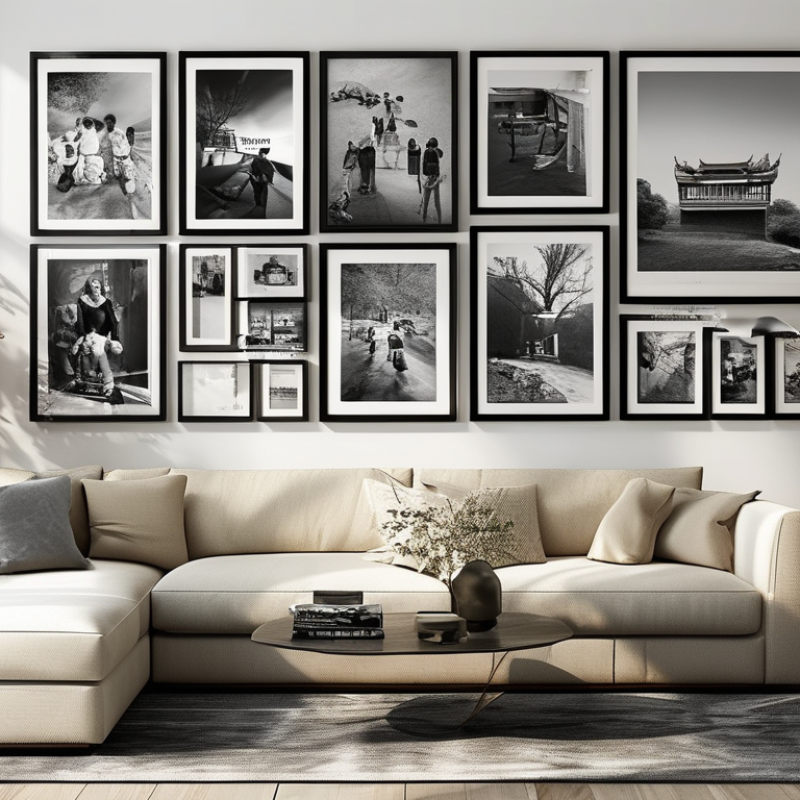
What Are the Top 10 Wall Big Photo Frame Ideas?

What Makes a Large Wall Photo Frame Stand Out?

A large wall photo frame stands out when scale, spacing, and image quality work together. In my experience, the strongest designs begin with one clear visual decision. Choose a single oversized portrait, a three-panel landscape, a grid of four prints, or a layered collage. Other effective ideas include a black-and-white gallery, a floating frame, or a deep shadow box. Try a slim metal border, a colorful family timeline, or a floor-to-ceiling statement piece. The frame should support the photograph, not compete with it. That balance matters. A sharp image needs generous matting, while a busy photograph may need a quieter edge. Use acid-free mat board and UV-filtering glazing for important prints. These choices reduce fading and protect paper from everyday moisture.

Placement makes the frame feel intentional. Keep the center near eye level, usually about 145 to 155 centimeters from the floor. Leave enough breathing room around furniture, doors, and nearby artwork. Measure twice. A frame that is too small looks lost, while one that is too large can make a room feel crowded. Warm wall lighting can reveal texture, but direct sunlight may damage photographs over time. I once hung a beautiful oversized print above a narrow console, and the proportions felt awkward. Adding a wider mat helped, although the result still looked slightly heavy. That mistake taught me to test layouts with paper cutouts before drilling. Secure larger frames with suitable wall hardware, and ask a qualified framer to assess valuable originals.

The Top 10 Large Wall Photo Frame Ideas to Explore

Large wall photo frames can turn an empty surface into a personal focal point. The best layouts balance image scale, wall proportion, lighting, and everyday movement. A single oversized portrait creates quiet impact. A three-panel landscape adds rhythm. A symmetrical gallery grid feels orderly, while an uneven cluster feels more relaxed. A panoramic frame suits long walls and dining areas. A staircase arrangement follows movement naturally.

Other large wall photo frame ideas include a family timeline, a black-and-white photo collection, a wide frame above a console, a layered frame ledge, and a floor-to-ceiling display. A family timeline works well when photographs share similar colors. A monochrome collection often looks more professional than mixed, brightly colored images. For a ledge, overlap frames slightly and vary their heights. Keep the arrangement stable. It should not look accidental.

Measure before drilling. Leave roughly 8 to 12 centimeters between neighboring frames, depending on frame width. Place the visual center near eye level, but adjust it for sofas or tall furniture. Use lightweight acrylic glazing in busy spaces, and check wall anchors carefully. Humid rooms may damage paper prints over time. I once placed a large frame too close to a doorway; the composition looked attractive, but daily traffic made it impractical. That mistake taught me to test layouts with paper cutouts first. Small flaws remain. They can make the display feel lived-in, not careless.

How to Choose the Right Frame Style and Size

What Are the Top 10 Wall Big Photo Frame Ideas?

Choosing the right frame style starts with the room’s visual rhythm. Consider a gallery grid, salon wall, triptych, diptych, oversized portrait, picture ledge, monochrome series, mixed-frame collection, floating frame, or floor-leaning display. Each idea needs a different balance of scale, spacing, and contrast.

Measure the wall before buying anything. A large frame should usually cover about two-thirds of the furniture below it. Above a sofa, leave roughly 15 to 25 centimeters between the frame and upholstery. Choose a 5 to 8 centimeter gap between gallery pieces. My first layout used narrow frames and looked scattered. Bigger mats would have helped.

Frame style should support the photograph, not compete with it. Thin black frames suit architectural images, while warm wood adds softness to portraits. White mats create breathing space around busy images. The National Association of Realtors’ 2023 Remodeling Impact Report gives interior painting a Joy Score of 10 out of 10, so wall color deserves attention too. It changes how the frame reads.

Budget matters as well. The Art Basel and UBS Art Market Report 2024 valued the global art market at about 65 billion dollars in 2023, while online sales represented 18 percent. That suggests many buyers are still comparing images digitally. Screen colors can mislead. Request a physical proof when possible. A perfect match is not guaranteed.

What Are the Top 10 Wall Big Photo Frame Ideas? - How to Choose the Right Frame Style and Size

No. Wall Photo Frame Idea Recommended Frame Style Suggested Size Best Placement Why It Works Selection Tip
1 Oversized Single Portrait Simple black, white, or natural wood frame 24 × 36 in or larger Above a sofa, console, or bed Creates a strong focal point without making the wall look busy. Choose a high-resolution image and leave balanced space around the frame.
2 Three-Frame Triptych Matching thin frames with coordinated images Three panels, 16 × 20 in each Long walls and areas above wide furniture Adds rhythm and symmetry while visually filling a broad wall. Keep the gaps consistent, usually about 2–4 inches between frames.
3 Grid Gallery Wall Identical frames arranged in a precise grid Six to nine frames, 12 × 16 in each Dining rooms, hallways, and stair landings Provides a clean, organized look for family or travel photographs. Measure the complete layout first and use a paper template for alignment.
4 Eclectic Gallery Wall Mixed frame colors, finishes, and orientations Frames from 8 × 10 to 20 × 30 in Living rooms and creative workspaces Creates a personal, layered display with visual variety. Unify the arrangement with one repeated element, such as a shared color or mat style.
5 Panoramic Landscape Frame Wide horizontal frame with a slim profile 20 × 40 in or 24 × 48 in Above beds, sideboards, and long media units Emphasizes horizontal architecture and makes a room feel wider. Select a landscape image with a clear horizon and enough edge detail for cropping.
6 Vertical Statement Pair Two matching portrait-oriented frames Two frames, 18 × 24 in each Narrow walls and spaces beside windows or cabinets Adds height and balances areas with limited horizontal width. Align the frame centers and maintain an even vertical gap.
7 Floating-Mat Frame Deep frame with a visible space around the artwork 20 × 24 in or 24 × 30 in Modern bedrooms, offices, and entryways Adds depth and gives a casual photograph a gallery-style finish. Use a floating mat when the image has visible edges or textured paper.
8 Black-and-White Photo Series Uniform black frames with white mats Four to six frames, 11 × 14 in each Hallways, staircases, and minimalist interiors Maintains a cohesive appearance even when the photos show different subjects. Use consistent editing and mat proportions to strengthen the series effect.
9 Layered Ledge Display Leaning frames on one or two picture ledges Main frame 18 × 24 in with smaller frames Rental homes, bedrooms, and flexible living areas Makes it easy to refresh photographs without repeatedly drilling into the wall. Keep heavier frames on the lower ledge and secure them against slipping.
10 Full-Height Photo Panel Tall frame or framed photographic art panel 24 × 36 in to 30 × 60 in Entry halls, double-height walls, and large blank spaces Uses vertical space effectively and adds drama to oversized walls. Confirm wall height, hanging hardware, and viewing distance before choosing an extra-large size.

General sizing guide: For furniture-mounted displays, the total frame arrangement is often most balanced when it spans approximately two-thirds to three-quarters of the furniture width. Hang the visual center of the artwork around eye level, while leaving enough clearance above furniture for comfortable viewing.

How to Arrange Large Photo Frames on a Wall

Arranging large photo frames on a wall starts with proportion, not decoration. Measure the wall, furniture, and frame sizes before drilling. Keep the artwork’s center near eye level, usually about 57 to 60 inches from the floor. Above a sofa, leave roughly 6 to 10 inches of breathing room. A strong anchor frame can guide the entire layout.

For ten flexible ideas, try

  1. a single statement frame
  2. a balanced pair
  3. a three-frame triptych
  4. A four-frame grid creates order
  5. while a staircase arrangement follows a stairway naturally
  6. A salon wall mixes sizes around one visual center
  7. Symmetrical rows feel formal
  8. but an asymmetrical cluster feels more relaxed
  9. Frames aligned along one bottom edge look calm
  10. Leaning frames on a picture ledge add depth
  11. A narrow vertical column can brighten a small wall.

Use paper templates to test spacing before installation. Two to four inches between frames often feels connected without looking crowded.

I once placed a large frame too high, and the room felt strangely disconnected. It looked fine from the floor, but not from the sofa.

Check the view from several positions. Mark studs or use suitable wall anchors for the frame’s weight. Natural light can create glare, so tilt glass slightly when possible. Leave room for future changes, because a perfect arrangement may become limiting.

How to Install and Maintain Your Wall Photo Display

What Are the Top 10 Wall Big Photo Frame Ideas?

How to Install and Maintain Your Wall Photo Display

Large photo frames can create a strong focal point above a sofa, dining table, or hallway console. Popular ideas include a single portrait frame, a three-frame row, a balanced grid, a salon wall, and mixed-size layouts. Other options include a black-and-white theme, a travel-photo cluster, a family timeline, a floor-to-ceiling display, and one oversized landscape image. Before drilling, place paper templates on the wall. This reveals spacing problems early. I once ignored this step, and the frames looked slightly uneven.

Choose wall anchors according to the wall material and frame weight. A stud offers the safest support for heavy pieces. Use a level, measuring tape, and two-person lifting for oversized frames. Keep the center of the display near eye level, usually around 145 to 155 centimeters from the floor. Leave consistent gaps, often 5 to 10 centimeters. Check doors, vents, and direct sunlight before final installation. Sunlight can fade prints and warm delicate materials.

Tips: Wipe glass with a soft, lint-free cloth. Avoid spraying cleaner directly onto the frame. Inspect hooks every few months. Tighten loose hardware carefully. Keep moisture away from wooden edges. For coastal or humid rooms, use protective backing and ventilation. Dust still collects behind frames. I sometimes forget that part. Recheck alignment after cleaning, especially on busy walls or near vibrating appliances.

FAQS

: How large should a wall photo frame be?

: Choose a frame covering about two-thirds of the furniture below it. Measure first.

How much space should I leave above a sofa?

Leave roughly 15 to 25 centimeters between the frame and upholstery. Six to ten inches also works.

What spacing works between several frames?

Keep about 5 to 8 centimeters between gallery pieces. Two to four inches feels connected without crowding.

Which frame style suits different photographs?

Thin dark frames support architectural images. Warm wood softens portraits. White mats give busy photographs more breathing space.

How can I arrange large frames on one wall?

Try a grid, triptych, balanced pair, salon wall, or asymmetrical cluster. Aligning lower edges creates a calmer appearance.

Where should the artwork’s center sit?

Place the center near eye level, usually 57 to 60 inches from the floor. Check it from the sofa too.

How can I test an arrangement before drilling?

Cut paper templates matching each frame. Tape them to the wall and adjust spacing first.

What should I consider before mounting a heavy frame?

Locate wall studs or use suitable anchors. Check the frame’s weight and the wall material carefully.

How can I reduce glare on framed photographs?

Avoid strong direct sunlight when possible. Tilt the glass slightly to reduce reflections.

Is a perfect color match guaranteed?

No, it is not. Screens can distort colors, so request a physical proof when available.

Conclusion

A Wall Big Photo Frame can transform an empty wall into a meaningful focal point by combining personal memories with thoughtful design. The most appealing options stand out through balanced proportions, quality materials, suitable colors, and layouts that complement the room. Popular ideas include a single oversized portrait, a coordinated family photo display, a grid of matching frames, a layered gallery arrangement, a themed travel collection, a black-and-white composition, a collage of changing images, a floor-to-ceiling display, a frame paired with decorative objects, and a minimalist statement piece.

Choosing the right frame style and size depends on the wall area, furniture placement, lighting, and the atmosphere you want to create. Before installation, plan the arrangement with paper templates or measurements to maintain consistent spacing and visual balance. Secure the frame with appropriate hardware, keep it away from excessive moisture or direct sunlight, and clean the surface gently. With careful planning and regular maintenance, your wall photo display can remain attractive, organized, and personal for years.


Madeline

Madeline

Madeline is a dedicated marketing professional with a wealth of expertise in our company's core offerings. With a keen understanding of the industry, she brings a unique perspective to her role, consistently delivering high-quality content that highlights the superior aspects of our products. As......