Bathrooms often have limited wall space, yet one thoughtful artwork choice can change their entire mood. Bathroom Wall Canvas designs bring color, texture, and personality to otherwise plain walls. A soft botanical print can make a narrow room feel calmer. A crisp geometric image may suit a modern vanity. Small changes matter. The best choice depends on more than appearance, though. Light, wall color, room size, and everyday moisture all affect how artwork looks and lasts.
This guide explores ten bathroom canvas ideas, from coastal scenes and abstract shapes to vintage illustrations and restrained monochrome prints. Each style offers a different way to complement tile, towels, and fixtures without crowding the room. Practical placement matters too: keep canvas away from direct splashes, consider ventilation, and check the maker’s care instructions before buying. No print works perfectly in every bathroom. A pale image might disappear against bright tile, while a bold design can feel too busy in a small space. That is worth reconsidering. Use the ideas as a starting point, then judge them against your room’s actual light, finishes, and routine. A well-chosen canvas should feel intentional, stay easy to care for, and make the bathroom more personal.
What Are the Top 10 Bathroom Wall Canvas Ideas?
Bathroom canvas art should support comfort, not invite moisture damage. EPA guidance commonly places indoor relative humidity between 30% and 50%. In a steamy bathroom, a small hygrometer near the door can reveal problems that mirrors hide. Keep canvas away from direct shower spray. Use sealed edges and moisture-resistant finishes where possible.
Ten practical themes include botanical leaves, coastal lines, abstract water shapes, pale geometric forms, stone textures, botanical silhouettes, soft landscape scenes, ceramic-inspired patterns, simple typography, and warm neutral studies. Choose light colors for small bathrooms. They reflect more available light. Avoid thick, absorbent canvas near wet zones. It can hold moisture longer than expected.
Ventilation matters more than decoration. ASHRAE 62.2 commonly identifies bathroom local exhaust around 50 cfm intermittently or 20 cfm continuously, depending on the applicable edition and installation. Confirm the current requirements with a qualified professional. Run the fan during bathing and for several minutes afterward. A quiet fan is helpful, but quiet does not always mean effective. I have seen bathrooms with attractive art, clean grout, and hidden mildew behind frames. That mistake is easy to repeat. Leave a small air gap behind the canvas, inspect corners monthly, and reconsider the artwork if humidity stays above 50%.
Bathroom canvas works best when placed away from direct splash zones and supported by effective ventilation. The chart ranks ten design concepts using an editorial design-fit score based on visual versatility, ease of coordination, and practicality in a well-ventilated bathroom.
Design-fit scores are planning ratings, not laboratory measurements. Use moisture-resistant framing and avoid placing canvas where it receives direct water exposure.
Maintain approximately 30–50% relative humidity indoors to help limit excess moisture and condensation.
Common residential guidance is 50 cubic feet per minute (CFM) intermittent or 20 CFM continuous local exhaust for a bathroom. Confirm current local requirements before installation.
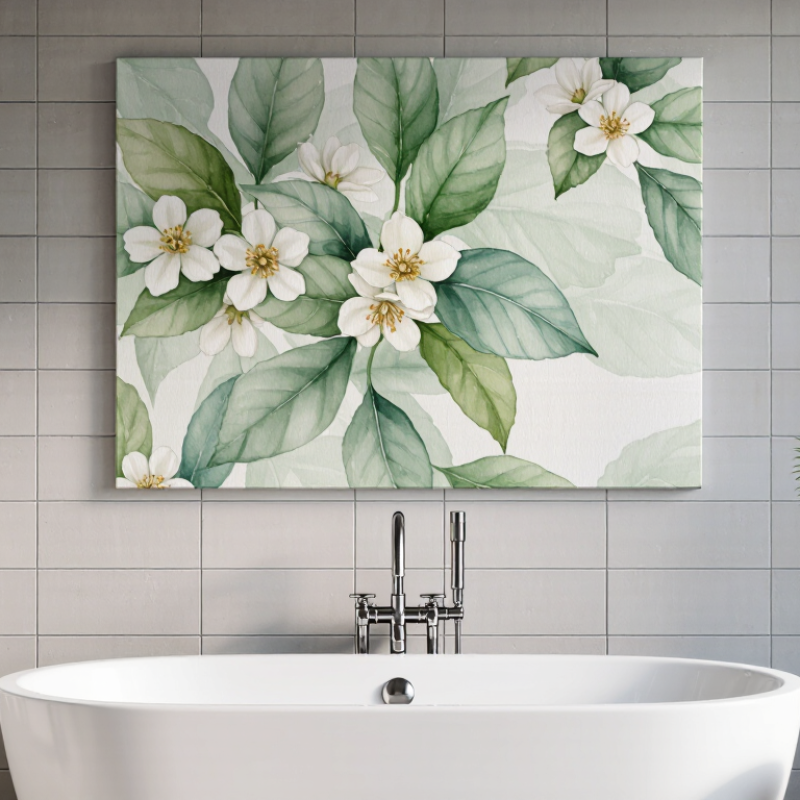
Botanical canvas art can soften a bathroom without making it feel crowded. Try fern silhouettes, eucalyptus stems, monstera leaves, pressed wildflowers, or a simple olive branch. These five ideas work well above a towel rail or beside a mirror. Choose muted greens, warm whites, and gentle clay tones for a calm, spa-like effect. A canvas with a sealed surface is safer in humid rooms, but it should still stay away from direct splashes. Good ventilation matters more than decoration alone.
Coastal artwork offers another five directions: a pale ocean horizon, hand-painted shells, dune grass, a quiet beach path, or a loose blue wave. Watercolor treatment keeps these scenes light and airy. Soft sand, foggy blue, and sea-glass green can make a small bathroom feel more open. I prefer simple frames with protected edges, especially near a sink. Avoid placing artwork where steam gathers heavily every day.
I once chose a beautiful leafy print that looked too dark beside white tiles. The mistake was obvious later. Natural light changed its mood completely. Test paper samples before ordering a large canvas. Leave breathing space around the artwork, and match its size to the wall rather than the bathtub. A slightly imperfect watercolor can feel more personal than a perfectly polished image. That small flaw may be the charm.
Minimalist line art can make a small bathroom feel calmer without competing with tile or fixtures. A single black contour drawing looks crisp against pale walls, while warm beige or muted green softens the room. Leave visible space around the canvas; crowded walls can make even simple art feel busy. Keep it quiet.
Typography adds personality, but the words should suit a room seen up close. A short phrase in a clean sans-serif font feels modern, while small serif lettering brings a softer, editorial touch. Check readability from the doorway before hanging it. Very thin letters may disappear in dim light, and oversized text can dominate a narrow wall. That balance is easy to misjudge.
Geometric canvases offer another modern option. Try a large arch, a few overlapping circles, or a grid in two restrained colors. Repeat a shade already present in towels or floor tile for a connected look. For a practical placement, keep artwork away from direct shower spray and allow room for ventilation. Bathroom humidity varies, so look for a canvas and finish suited to damp spaces, and follow the maker’s care guidance. Even then, a little warping can happen over time. I’d rather choose a modest, replaceable piece than expect any canvas to stay perfect.
| # | Canvas idea | Visual style | Suggested colors | Placement and practical notes |
|---|---|---|---|---|
| 1 | Minimalist Line-Art Faces | Single-line or sparse contour drawings with plenty of negative space. | Black, warm white, sand, or muted terracotta. | Works well above a towel rail or beside a vanity. Choose a simple composition for a compact wall. |
| 2 | Typography with a Short Phrase | Clean lettering featuring a brief, calm phrase or a single word. | Charcoal on ivory, or white lettering on a muted blue-green ground. | Keep the wording short and legible at a glance. Hang away from direct splashes. |
| 3 | Soft Geometric Shapes | Arches, circles, and overlapping blocks in a balanced abstract layout. | Cream, clay, olive, and pale gray. | Echoes the straight lines of tile and mirrors while adding a softer focal point. |
| 4 | Botanical Leaf Study | Illustrated leaves, fern fronds, or delicate stems with a restrained layout. | Sage, deep green, cream, and soft brown. | A natural fit for bathrooms with wood accents or live plants. Avoid placing canvas where it can get wet. |
| 5 | Coastal Horizon | A simplified sea-and-sky scene with broad, quiet bands of color. | Muted blue, warm white, pale gray, and sandy beige. | A horizontal format can suit the wall above a bathtub or a long vanity. |
| 6 | Stone and Marble Abstract | Organic veining or mineral-inspired forms without a busy pattern. | White, gray, taupe, and subtle metallic tones. | Pairs naturally with stone-look tile and understated metal fixtures. |
| 7 | Japanese-Inspired Minimal Landscape | A spare landscape with a branch, mountain outline, or sun motif. | Ink black, off-white, muted rust, and soft gray. | Use one strong focal image and keep nearby accessories uncluttered. |
| 8 | Small-Scale Repeating Geometry | Repeating arcs, dots, or grid-like forms arranged in a tidy pattern. | Navy and cream, black and white, or two muted neutrals. | A smaller canvas can add detail to a narrow wall without overwhelming the room. |
| 9 | Abstract Watercolor Wash | Soft translucent color fields with gentle edges and minimal detail. | Pale blue, sea-glass green, blush, or lavender. | Choose hues that repeat colors already present in towels, tile, or accessories. |
| 10 | Diptych or Coordinated Pair | Two related panels, such as matching line drawings or complementary shapes. | A shared neutral palette with one restrained accent color. | Align the panels evenly and leave a consistent gap; check that the wall has enough width. |
Bathroom care tip: Canvas is best kept away from direct water and persistent steam. Good ventilation and a suitable protective finish can help reduce moisture exposure, but follow the artwork maker’s care instructions.
A misty mountain landscape brings a quiet, spacious feeling to a small bathroom. A coastal horizon pairs naturally with pale tiles and soft blue towels. A botanical landscape adds leafy detail without needing real plants. A desert scene, with warm sand tones and distant mesas, can make white walls feel less stark. Choose calm imagery if the room is already visually busy.
Abstract canvases offer three more directions: gentle color blocks, loose watercolor-like brushstrokes, or minimal line art. Color blocks can echo towels or tile, while a single-line figure creates a lighter focal point. Vintage-inspired choices include an old-style botanical illustration, a weathered-looking map, and a retro still life of flowers or fruit. The map may feel charming, though it can look crowded in a narrow room. Try a paper template first.
Bathroom air is humid, so placement matters as much as subject. Keep canvas away from direct splashes, and use an area with good ventilation. A protective frame or glazing may help, but check that the artwork can still dry properly. Small details matter. I would avoid delicate, unprotected canvas beside a frequently used shower; even beautiful art can warp or fade there.
Wildlife canvas can bring a quiet focal point to a bathroom: a heron among reeds, a fox in snow, or close-up leaves with tiny water droplets. Choose imagery that suits the room’s light. Pale birds and misty landscapes can disappear against white tile, while deep greens may feel heavy in a narrow space. A small canvas beside a towel rail can feel intentional, not crowded. Keep it away from direct spray and steamy shower corners. The tempting spot is often the wrong one.
Placement matters as much as the picture. Hang artwork near eye level, and leave enough space around it so patterned tile does not compete. Canvas and wood can absorb moisture, so check the maker’s care guidance and look for a sealed surface suitable for humid rooms. A wipeable panel or protected print may be safer in a bathroom with weak ventilation. Let the room air out after showers. Small detail, big difference. Even careful material choices cannot prevent every humidity problem, and a slightly imperfect fit may become obvious under bright vanity lights. Test the placement with paper cut to size before making holes.
Common indoor guidance places relative humidity between 30% and 50%. A small hygrometer near the door can reveal lingering moisture.
Botanical leaves, coastal lines, abstract water shapes, pale geometry, and stone textures create calm focal points. Botanical silhouettes, soft landscapes, ceramic patterns, simple typography, and warm neutral studies add variety.
Light colors reflect available light and can make a compact room feel brighter. A misty mountain scene or pale coastal horizon may work well.
Keep it away from direct shower spray and choose a well-ventilated wall. Leave a small air gap behind the canvas so it can dry.
Common guidance cites about 50 cfm for intermittent exhaust or 20 cfm for continuous operation. Requirements vary by edition and installation, so confirm them with a qualified professional.
Run it while bathing and for several minutes afterward. A quiet fan is not always effective. I would check its performance rather than trust its sound.
Sealed edges and moisture-resistant finishes may help. Protective framing can also help, but the artwork still needs room to dry.
Humidity that stays above 50%, warped edges, or damp corners deserve attention. Inspect the frame corners monthly; I have overlooked them before.
Discover how Bathroom Wall Canvas can transform an ordinary bathroom into a relaxing, expressive space while remaining practical in a humid environment. The article begins with essential moisture-management guidance, including maintaining indoor relative humidity around the EPA’s 30–50% target and supporting proper ventilation in line with ASHRAE 62.2 principles. It also explains how to choose moisture-smart materials and position artwork away from direct splashes, standing water, and poorly ventilated areas.
The design ideas range from botanical, coastal, and watercolor themes that create a spa-like atmosphere to minimalist line art, typography, and geometric patterns suited to modern interiors. Landscape, abstract, vintage-inspired, and wildlife artwork offer additional ways to create personality and visual interest. With thoughtful sizing, placement, color coordination, protective finishes, and suitable ventilation, bathroom wall art can remain attractive, durable, and harmonious with the room’s overall style.